23 April 2026 Why place matters in social mobility interventions
At The Talent Foundry, we see that talent is everywhere, but opportunity is not. One of the biggest factors behind this inequality is place. Where a young person grows up still shapes what they can access, what they can see, and what they can dream of becoming.
The problem with a one-size-fits-all approach
Across the UK, social mobility outcomes are deeply unequal. This inequality becomes most critical at the transition from education into employment, further education or training. The risk of young people leaving school and becoming NEET (not in education, training or employment) is higher in certain areas, and, according to the Youth Futures Foundation, has increased by over 50% in the past five years.
Lingering effects of the pandemic and widespread income inequality have cemented this figure. The issue remains that educational systems are not designed to support young people equally. We work with young people full of drive and ambition, but who are being hindered by barriers to opportunity.
What the evidence shows
National strategies often fail when they don’t consider local realities and differences. Research, including the House of Lords’ Social Mobility Report and the Government's post-16 education and skills white paper, highlights how a lack of collaboration across labour markets, transport infrastructure, housing, education pathways and employer demand can impede progression for young people.
The Sutton Trust concluded that opportunity is unevenly distributed by place and is influenced by access to schools, subjects, networks, employers and progression routes – creating a postcode lottery.
A place-based approach
In many of the communities we work in, including former industrial towns and coastal areas, opportunity can feel distant. Young people tell us that they lack access to professional networks, that travel can be a barrier to opportunities and that they don’t see people like them in certain careers. These are structural limitations, shaped by geographical inequality.
Place continues to shape what possibilities exist for the students we work with, and social mobility must be about ensuring that all young people, no matter their background, have access to sustainable routes into education and employment.
Place-based approaches allow us to connect education with real employer demand and make pathways visible, relevant and achievable. In this way, we can build trusted relationships between schools, employers and communities, reduce fragmentation between services and create support that reflects the realities facing young people.
Shifting the focus from top-down methods to community and asset-based approaches enables accountability to sit where change happens, and make what already exists work better.
Designing programmes that are grounded in lived experiences, centre youth voices and sustain collective action over time is key. Long-term, geographically rooted partnerships between employers, educators and communities are crucial if we are to shift patterns of inequality and build pathways into local opportunity.
Our place-based programmes
At The Talent Foundry, much of our work is built around making local connections that reflect local needs. We deliver place-based approaches across areas including Blackpool, Driffield, Liverpool, Middlesbrough and Rochdale.
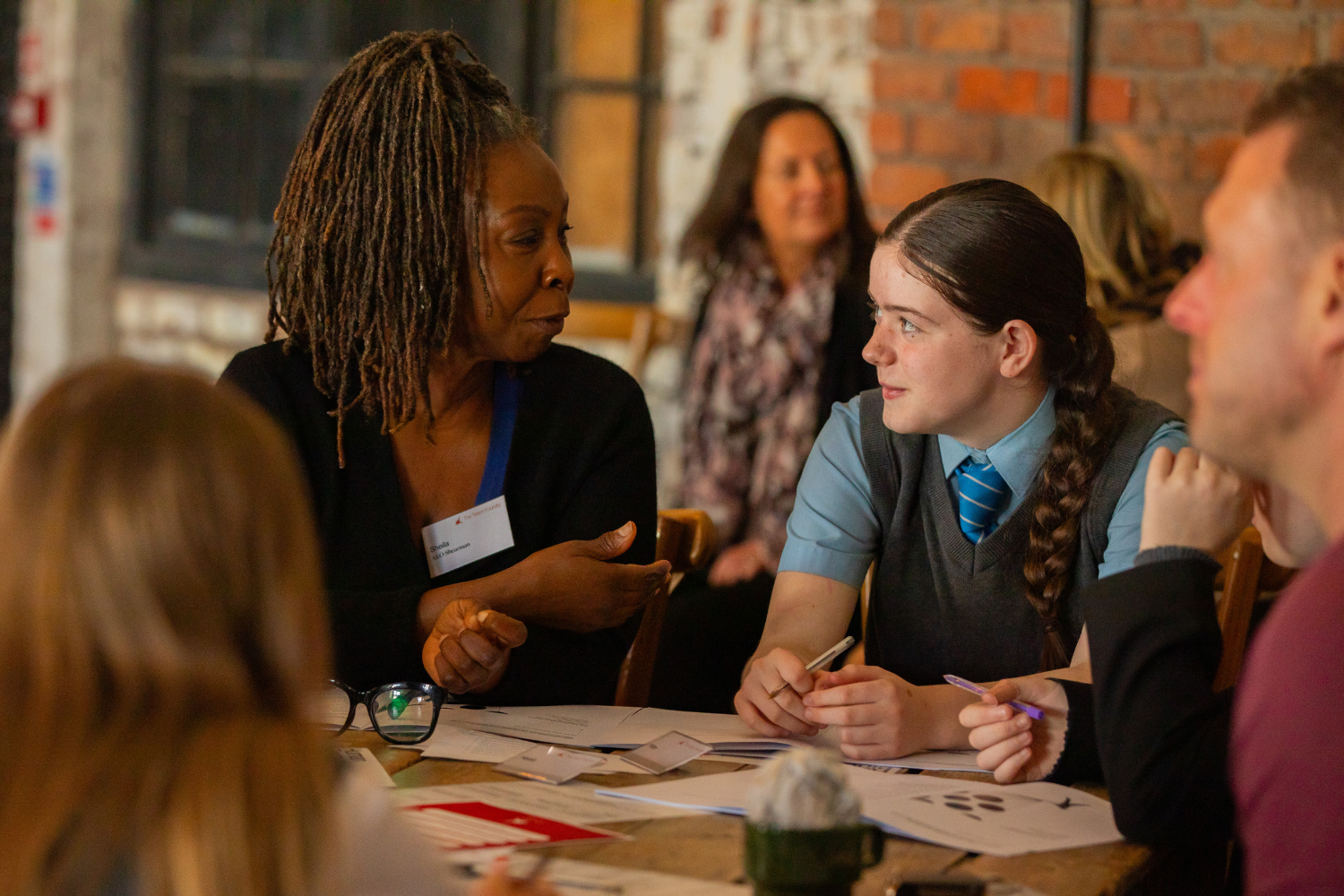
Our programmes support young people to build professional networks, engage in meaningful employer encounters, gain practical skills and confidence and see what is possible and how to get there.
With education and employers in alignment, place becomes a strength, not a barrier, and can turn regional disparities into opportunities. Young people shouldn’t have to leave their communities to succeed – they should be able to access meaningful, visible pathways where they live.
Learn more
Watch our Spark Liverpool film here